Choosing the right chrome ore processing equipment can be as complex or as simple as you make it. It all boils down to one word: matching. When the equipment is perfectly matched, throughput increases and concentrate grades remain stable. Get it wrong, and no amount of money will save you.
Today, let's look at a real-world project to illustrate this. In Mashonaland West Province, Zimbabwe, a 62-ton-per-hour (tph) chrome ore processing line was built entirely with equipment from Changyi Mining Machinery.
How has it performed after running for a while? Read on to find out.
It's no secret that Africa is rich in chrome ore resources. However, Mashonaland West Province stands out because its chrome deposits are relatively concentrated and mining conditions are quite favorable.
The mine manager had very clear requirements:
Given the unstable local power supply and poor road conditions, the machinery couldn't be too delicate. After comparing various options, they ultimately chose Changyi Mining Machinery.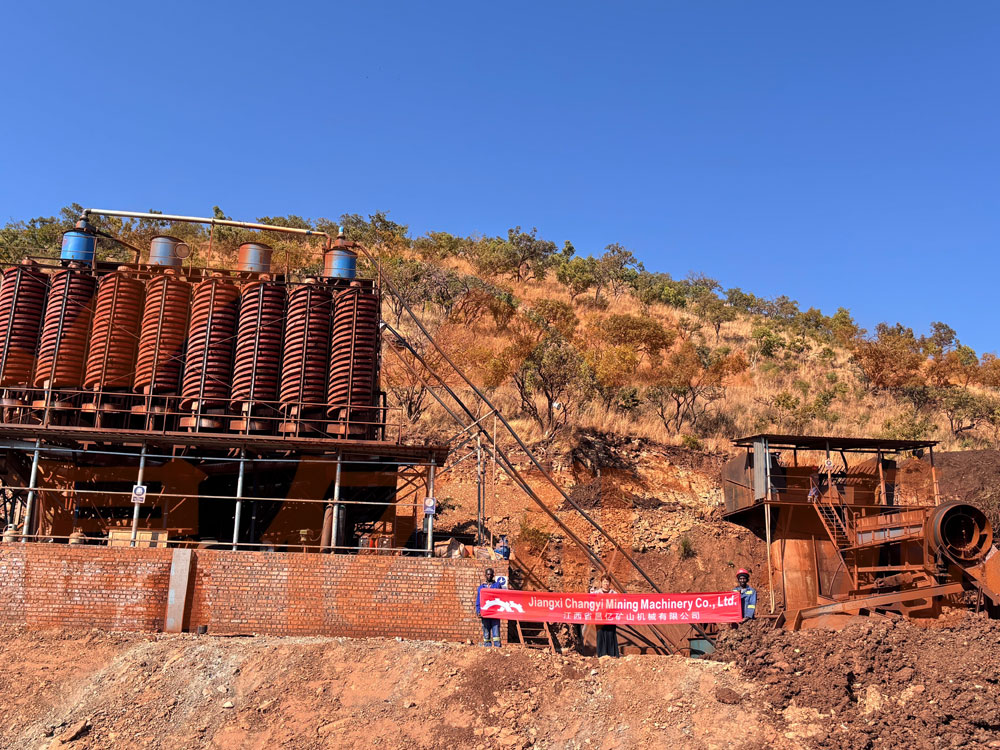
The result? The line actually achieved a throughput of 62 tph, slightly exceeding the design capacity.
Whether a production line can withstand harsh operating conditions depends entirely on the robustness of the equipment. For this project, Changyi Mining Machinery provided a core equipment configuration list where every machine served a precise purpose.
What's the main issue with raw chrome ore? Mud. Excessive mud can ruin the entire downstream process.
The GT1860 double-deck trommel acts as the first line of defense by washing and desliming the ore. Equipped with high-pressure water spray nozzles and 360-degree rotating paddles, it thoroughly strips away sticky clay adhering to the ore surface—almost like giving the rocks a deep scrub.
Its clever double-deck screen design also separates large waste rocks on the top layer while controlling the feed size on the bottom layer.
This significantly reduces the separation load on the downstream spiral chutes.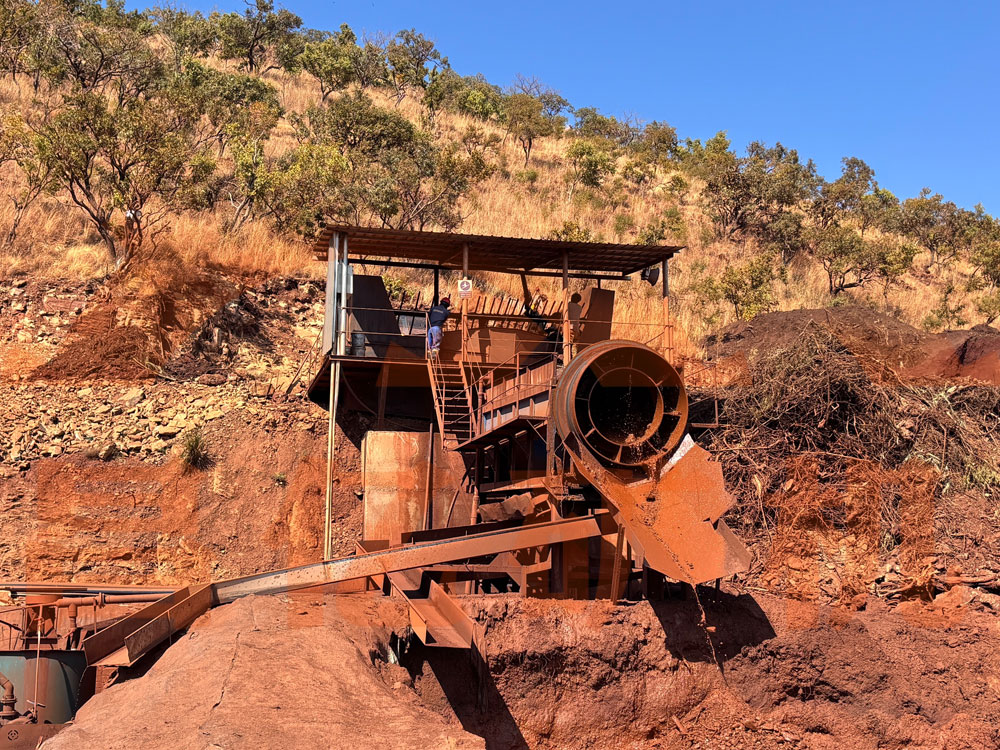
This is the undisputed core of the entire line.
Chrome ore has a specific gravity ranging from 4.0 to 4.8, which is much heavier than the associated gangue minerals.This significant density difference makes it an ideal candidate for spiral chute separation.
The BLL-1200 model features a wide separation surface and high processing capacity, allowing a single unit to handle substantial loads. With 48 units operating in parallel, achieving 62 tph is easily manageable.
Simply put, these 48 spiral chutes are what keep this line running smoothly.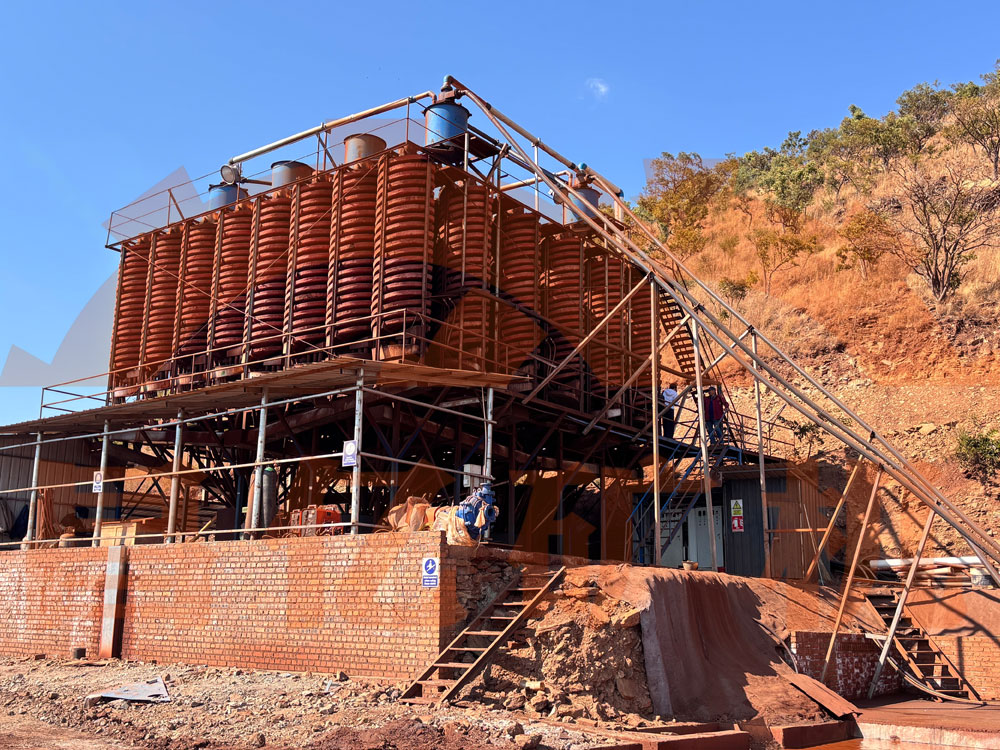
Stable slurry concentration directly determines the success of gravity separation.
The 1500mm agitator tank ensures the ore and water are mixed evenly. While this sounds straightforward, incorrect slurry concentration will drastically reduce chute efficiency.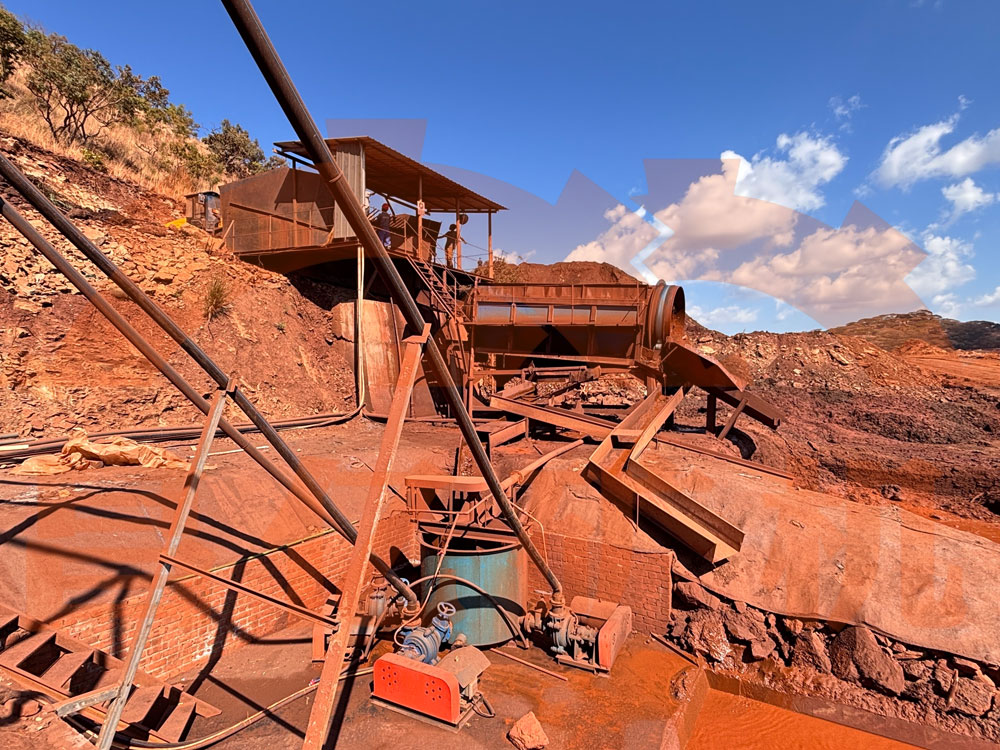
The eight slurry pumps act as the "veins" of the system, transporting the slurry from one piece of equipment to another. Insufficient head causes pipe blockages, while inadequate flow leads to material starvation. The equipment selected for this project was perfectly matched, ensuring zero transport issues post-commissioning.
At its core, this 60-tph production line is all about targeted solutions:
Inside the chutes, high-density chromite particles enrich along the inner trough, while lighter gangue minerals and residual fine slime are washed away by the water flow.
Key Advantage: This purely physical gravity separation process requires absolutely no chemical reagents. Not only did this ensure smooth environmental approvals, but it also eliminated expensive reagent costs and tailings treatment fees, significantly boosting the project's economic returns.
Thanks to this equipment setup, the silica content in the concentrate dropped substantially, and the final chrome concentrate grade easily exceeded 45%, consistently meeting international smelting standards.
When mining in Africa, the biggest fear is equipment breaking down with nowhere to get repairs.
Changyi's technical engineers specifically addressed this concern. Motors were upgraded, and structural components were reinforced to withstand high temperatures and humidity.
After commissioning, we spoke with the Zimbabwean mine owner several times. Despite his broken Chinese, his message was crystal clear:
"I was worried about transit damage when the equipment was shipped over. But the packaging was incredibly sturdy—not a single scratch upon arrival. We ran tests for three days, and output stabilized immediately. What surprised me most was the maintenance. In six months, we’ve only replaced a few rubber liners on the chutes; nothing else needed touching. With my previous supplier's equipment, I had to do repairs every three months. This is truly hassle-free."
Since commissioning, the owner himself has noted that maintenance costs have been lower than expected. Hearing this directly from a client is far more effective than any advertisement.
There is no one-size-fits-all price. It depends entirely on your raw ore grade, target concentrate specifications, and required capacity. For this 60-tph line in Zimbabwe, the total investment was in the hundreds of thousands of RMB. For an accurate quote, we need to discuss your specific needs based on ore samples.
No. Spiral chutes rely heavily on density differences. Since chrome ore naturally has a high specific gravity compared to gangue, it is highly suitable. However, if your ore is extremely finely disseminated (e.g., particle size under 0.1mm), relying solely on chutes will drop recovery rates. In such cases, shaking tables or high-intensity magnetic separators must be added.
Three words: Customs, Voltage, and Roads.
Zimbabwe uses a 220V/50Hz power supply, which differs from China’s, so equipment must be adapted in advance. Regarding transportation, some mining areas have terrible roads, so modular or disassembled packaging is highly recommended. Having completed numerous projects in Africa, Changyi Mining Machinery has already navigated these pitfalls.
Not at all. Because no flotation equipment is used, the overall layout is highly compact, requiring only about 500 to 800 square meters—much smaller than a flotation plant. For mines with limited space, a gravity separation route is definitely more space-efficient.
Looking back at this project, there is nothing overly fancy about it. Screen it with the GT1860, mix it in the agitator tank, separate it across 48 spiral chutes, and pump it through the system. The process isn't complicated, but every step is precisely calibrated.
This is the core logic behind selecting chrome ore processing equipment: it’s not about buying the most expensive gear, but finding the best match.
If you are considering a chrome project in the 60-tph range, Changyi Mining Machinery’s solution is certainly worth comparing against.

