
Crushing & Screening Plant Automation has become a core competitive factor in modern mining and aggregate operations. With increasing labor costs, tighter environmental compliance, and higher throughput requirements, an integrated PLC control system for crusher plant combined with SCADA mining system integration and predictive maintenance for crushing plant is no longer optional — it is foundational engineering.
This EPC-level technical guide presents a complete Crushing & Screening Plant Automation architecture, focusing on system engineering logic, hardware selection, control strategies, digital twins, predictive analytics, and lifecycle integration. The objective is to provide overseas mining investors, EPC contractors, and technical directors with a deployable automation framework.
The engineering objective of Crushing & Screening Plant Automation is to transform a mechanical process into a measurable, controllable, and optimizable industrial system.
In a traditional crushing plant, operations depend heavily on operator experience. However, a modern mining plant automation engineering system converts feed rate, motor load, vibration, and temperature into real-time logic decisions.
Automation transforms static process design into a dynamic control loop:
Input → PLC Logic → Equipment Adjustment → Feedback → Optimization
For upstream process design, refer to:
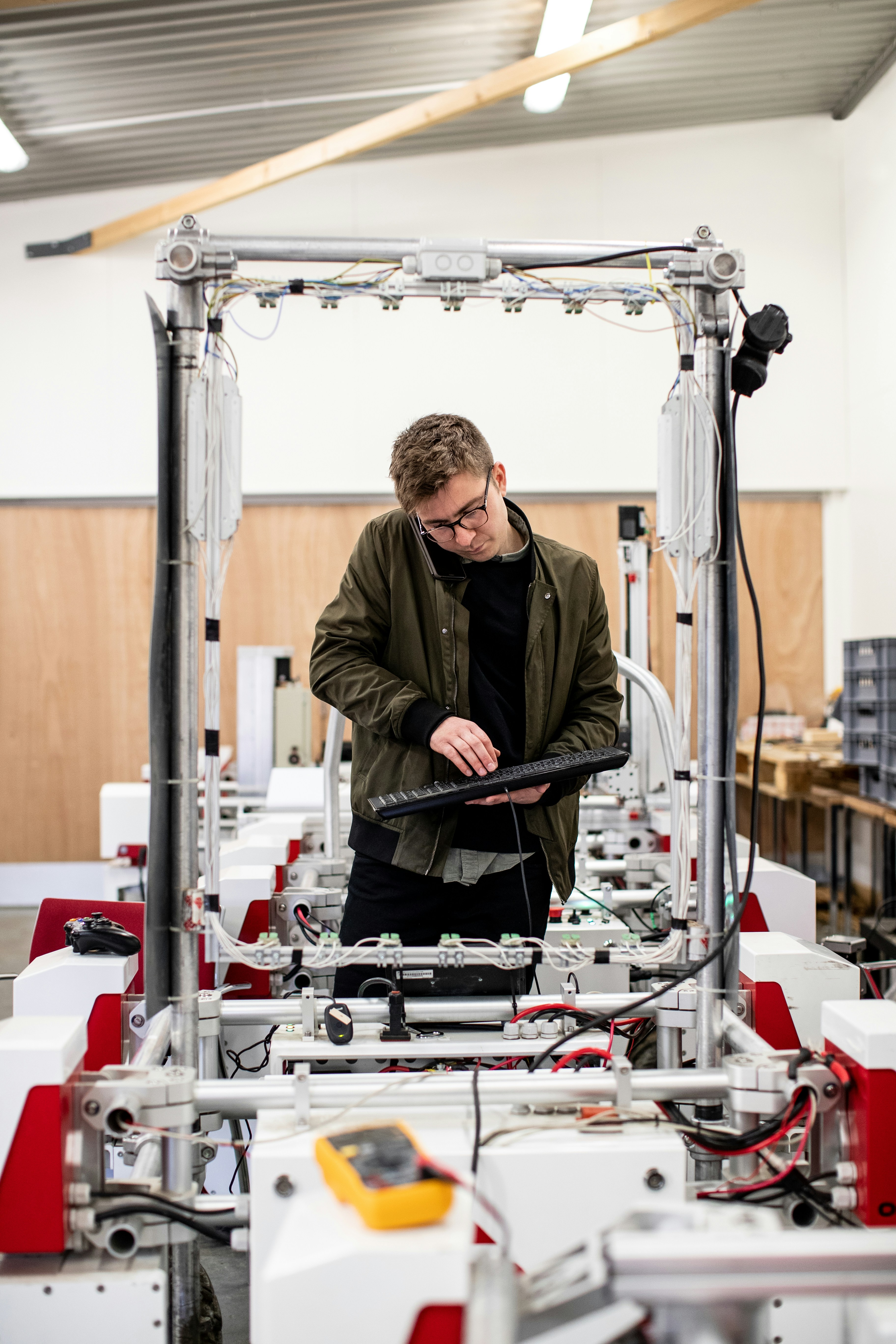
A robust PLC control system for crusher plant serves as the brain of the Crushing & Screening Plant Automation framework.
For example, in cone crusher automation:
This logic prevents overload events and improves crusher lifespan.
SCADA mining system integration provides plant-wide visibility. It connects multiple PLC nodes into a centralized monitoring platform.
In overseas projects, SCADA allows remote access for technical support teams, reducing response time by 30–50%.
Typical KPIs monitored in Crushing & Screening Plant Automation include:

Predictive maintenance for crushing plant integrates sensor data analytics to forecast failures before breakdown occurs.
Using machine learning algorithms, predictive models estimate remaining useful life (RUL).
Example:
If vibration amplitude increases 15% week-over-week, system predicts bearing failure within 120 hours and schedules maintenance.
This approach reduces unplanned downtime by 20–40% in automated crushing plants.
A comprehensive Crushing & Screening Plant Automation system requires strategic sensor deployment:
Data acquisition frequency typically ranges from 1–5 seconds for dynamic processes.
Capacity optimization is the primary economic driver of Crushing & Screening Plant Automation.
Real-time capacity model:
Throughput = f(feed rate, CSS, liner wear, material hardness)
Advanced automation dynamically adjusts feeder VFD speed to maintain choke feed conditions, improving reduction ratio and product shape.
Related design references:
Modern mining plant automation engineering must consider cybersecurity.
Best practice includes:
Implementation stages of Crushing & Screening Plant Automation:
Automation must be integrated during plant design, not retrofitted after mechanical installation.
Financial justification model:
Typical ROI period: 12–24 months depending on plant scale.
Project Scope:
Results:
The Crushing & Screening Plant Automation framework delivered measurable operational efficiency improvements.
Crushing & Screening Plant Automation integrating PLC control system for crusher plant, SCADA mining system integration, and predictive maintenance for crushing plant is a strategic engineering upgrade. It enhances throughput stability, equipment longevity, safety, and profitability.
For overseas mining projects and aggregate plants, automation is no longer an optional add-on. It is a core element of modern intelligent crushing plant control.
Contact our engineering team for customized automation solutions aligned with your project capacity and operational objectives.
