In mineral processing, tailings grade is the number that tells the real story.
It’s the best barometer for how well your mine is running.
Plenty of mines keep tonnage steady and run equipment flat-out. Yet, revenue stalls.
The culprit? Tailings grade that won't come down.
The higher that number, the more good mineral you're flushing away. That’s wasted ore. That’s a hit to recovery. That’s money down the drain.
Ask any operator on the floor. They’ll tell you the same thing: tailings grade swings all over the place.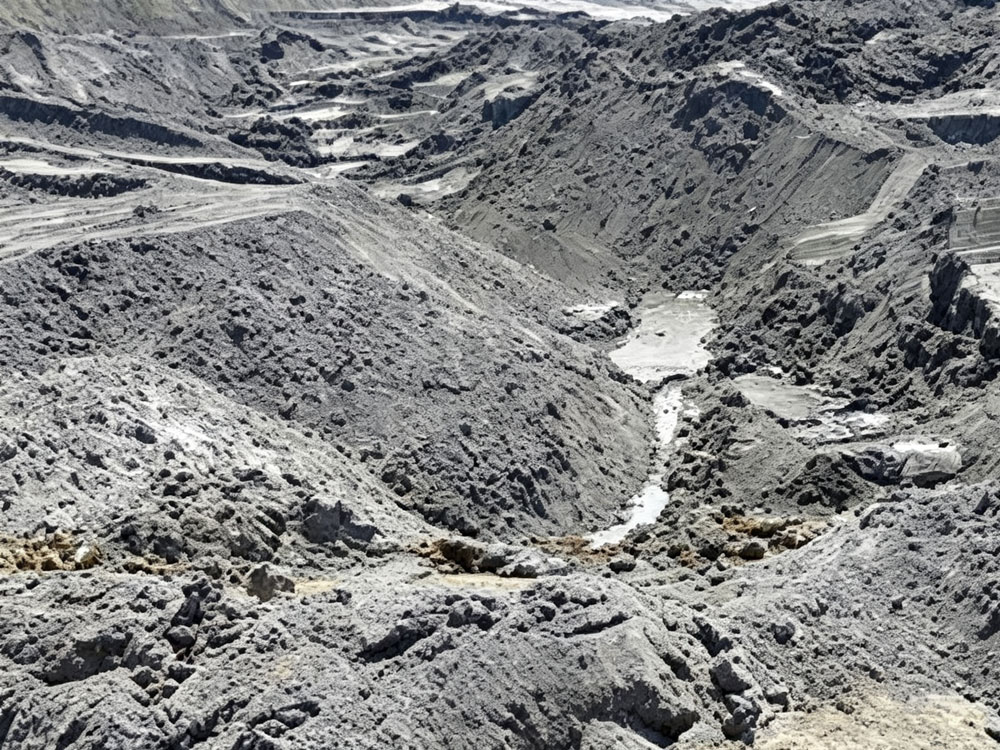
Folks think it’s just about tweaking one knob. It isn't.
Keeping tailings grade in check is a whole-plant job. This guide pulls from real-world experience to help you stop bleeding mineral into your tailings stream.
You can't control what you don't understand.
Before chasing numbers, get a grip on the fundamentals. When conditions shift—and they will—you need to diagnose fast.
It’s the percentage of valuable mineral left in the waste.
It tells you one thing: Did you get the good stuff out, or did you let it slip?
Some folks shrug and say a little leftover mineral is just the cost of doing business. It’s not.
A high tailings grade hits you three ways:
Here’s the thing. The point isn't to drive grade to zero. It’s about balance.
You’ve got three plates spinning:
Push tailings grade too low? Your reagent bill explodes. You risk contaminating your concentrate.
Let it run high? You’re hemorrhaging value.
The sweet spot: Keep your concentrate spec'd right, and park your tailings grade at a reasonable low.
When tailings grade goes sideways, it’s rarely one thing. It’s usually a stack of small problems compounding.
Here are the five most common culprits.
Feed variability is Public Enemy Number One.
One batch is hard, the next is soft. One has clay, the next doesn't. Grain size and oxidation state shift from one stope to the next.
If you run the same setpoints day in and day out, your separation will drift. Fine valuable particles will slip right through to the tailings.
Grinding exists for one reason: to break ore apart so your equipment can tell the good mineral from the waste.
Either way, your tailings grade goes up.
Your reagent scheme makes or breaks your separation.
Dosage, ratio, addition point—every detail moves the needle.
Equipment that isn't dialed in is equipment that's costing you money.
Is flotation level off? Is aeration drifting? Is scraper speed wrong?
Any one of those will tank your separation. Add worn-out parts that never get swapped, and you’ve got a plant running well below its capability.
At a lot of small-to-mid-size operations, the tailings problem is a people problem.
Small misses pile up. Before you know it, you’ve got a chronic tailings grade problem.
Now that we know what's wrong, here’s how to fix it. This is a full-circuit playbook.
Stable feed is the foundation. The steadier your ore going in, the easier everything downstream becomes.
Your target grind should match your ore. Not some textbook number.
Figure out your mineral's liberation size. Set your fineness accordingly.
Pull samples every hour. Check your grind. Adjust your ball charge and feed rate on the fly.
The goal: Full liberation without over-grinding into slime.
The philosophy is simple: Small doses. Often. Right on the money.
Watch your pulp temperature and density. Adjust dosage in real time. Run bench tests to nail down the right ratios.
Keep your reagent lines clean. Degraded reagents are useless. They just waste money while giving you lousy separation.
Calibrate your equipment like your P&L depends on it. Because it does.
When parts wear out, replace them. Running worn equipment is just paying to lose mineral.
If your circuit has a known weakness, bolt on a scavenging stage.
Run your primary tailings through a second pass. Catch the fine particles that got away the first time.
It’s a low-cost add. It’s straightforward. And it works.
The next step up is intelligent process control.
The old way—operators eyeballing things—leaves too much room for error.
Bigger operations are putting in online grade analyzers and automated dosing systems.
These systems watch your process 24/7. They catch small shifts in flow and density before they become big problems.
Compared to manual operation, you get tighter control and faster response. You take the human error out of the equation.
Tailings grade control isn't a single fix. It's a full-circuit discipline.
Do it right, and you’ll drive your tailings grade down and your recovery up.
That’s how you squeeze more value out of every ton of ore you pull from the ground.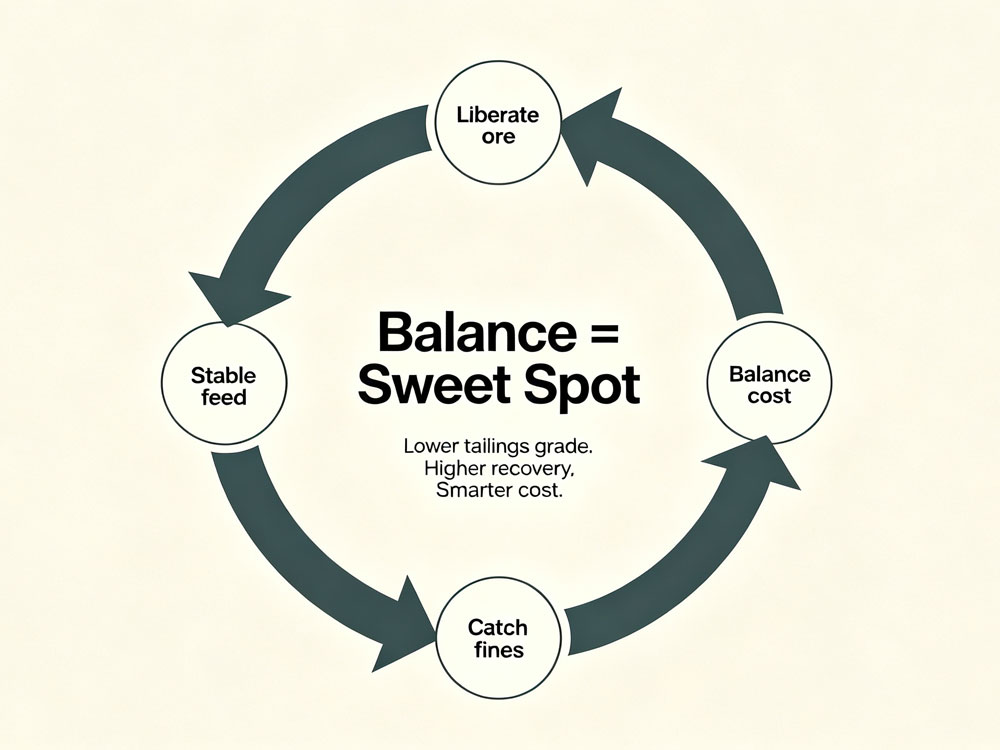
Q: Is lower tailings grade always better?
Nope. The lowest number you can technically hit isn't the number that makes you the most money. Push it too low, and your costs go through the roof. You end up spending a dollar to save a dime.
Q: Tailings grade just spiked. What do I check first?
Check the front end. Look at your grind size and classification efficiency. Nine times out of ten, the ore wasn't liberated properly upstream.
Q: Fine particles are reporting to tailings. What do I do?
Standard flotation struggles with ultra-fines. Try adding a dispersant to break up the slime. Or bring in a centrifugal concentrator built for fine material.
Q: How do I know if I'm over-optimizing?
If your tailings grade dropped by 0.1% but your reagent consumption jumped 10%, you're past the point of diminishing returns. Ease off.
Related Reading:
《Head Grade Explained: How It Impacts Mine Profitability》
《Concentrate Grade Explained: Calculation, Fluctuations & Optimization》
