Crushing, grinding, flotation, or dewatering? Choosing the right mineral processing equipment is the key to maximizing your mine's recovery rate and profits. Don't waste capital on the wrong setup! Read our complete equipment selection guide and FAQ to optimize your mining operation today.
Faced with increasingly complex ore characteristics and today's stringent environmental regulations, many mine owners are still blindly following the crowd when purchasing equipment.
To be brutally honest: if you haven't fully grasped the fundamental question of "what exactly constitutes mineral processing equipment," are you willing to watch your massive capital investment turn into a pile of idle scrap metal simply because of a single incorrect equipment selection?
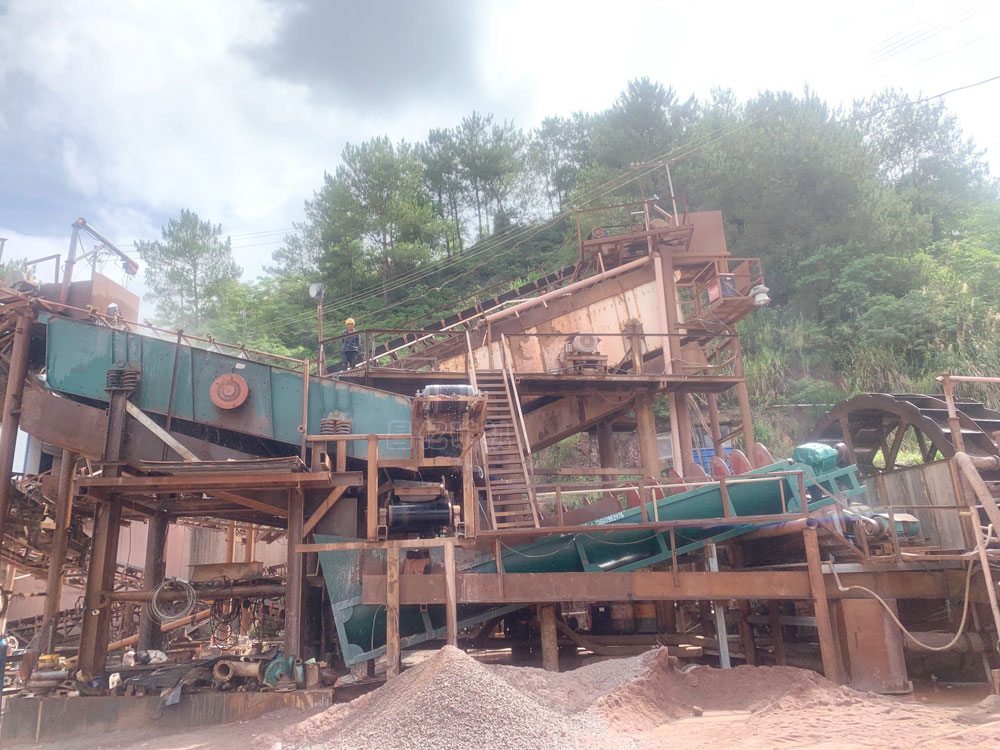
In modern mining, mineral processing equipment is the lifeline that determines resource recovery rates and whether a mine can be profitable. With declining ore grades, assembling a scientific and comprehensive mineral processing system is far from a simple patchwork job. Large-scale, intelligent, and highly energy-efficient equipment is now the industry standard.
So, what exactly makes up a complete mineral processing system? Let's take an objective look today.
1. Crushing and Screening: The First Line of Defense in Mineral Processing
Reducing large raw ore to a processable size and removing impurities in advance relies entirely on crushing and screening.
Crushing Equipment
Selection depends on ore hardness and processing scale:
- Jaw Crushers: Simple in structure and extremely durable. They are a fail-safe choice for primary crushing in small to medium-sized mineral processing plants.
- Hammer Crushers: Feature a high reduction ratio and uniform discharge size. Ideal for processing medium-hard or brittle materials like limestone and coal.
- Cone Crushers: The workhorses for secondary and fine crushing. They offer a high reduction ratio and uniform product size. When dealing with "hard rocks" like granite and iron ore, their processing efficiency is over 30% higher than standard impact crushers.
- Compound Crushers: Combine impact and grinding for a high reduction ratio with easily adjustable discharge sizes. Without screen bars, they are highly resistant to clogging, even when handling high-moisture or clay-rich materials.
Screening Equipment
For the screening stage:
- Circular & Banana Vibrating Screens: Perfect for pre-screening before secondary crushing or closed-circuit fine crushing.
- High-Frequency Fine Screens: Commonly used in closed-circuit grinding and classification to control over-grinding.
- Trommel Screens: Rely on an inclined rotating cylinder for classification. Simple, high-capacity, and anti-clogging, they handle both dry, wet, and sticky materials effortlessly.
- Rotary Scrubbers: The go-to solution for difficult-to-wash, clay-heavy ores. As materials tumble inside the rotating cylinder, high-pressure water jets rapidly disperse clay lumps while completing preliminary screening.
2. Grinding and Classification: The Key to Mineral Liberation
The success of grinding directly determines whether valuable minerals and gangue can be completely liberated.
Grinding Equipment Selection:
- Ball Mills: Widely used. Grid-type is preferred for coarse grinding, while overflow-type is the standard for fine grinding and large-scale plants.
- Autogenous (AG) & Semi-Autogenous (SAG) Mills: Can grind large raw ore directly to fine sizes, eliminating the need for a separate crushing circuit. Best suited for ores with moderate hardness.
- Rod Mills: Produce a uniform particle size distribution with minimal over-grinding. Ideal for pre-grinding tungsten and tin ores before gravity separation.
Classification Equipment:
- Spiral Classifiers: Typically paired with grid-type ball mills, classifying based on the settling velocity of solid particles.
- Hydrocyclones: Compact footprint with high classification efficiency. They are the "golden partner" for large overflow ball mills and AG/SAG mills.
3. Separation and Purification: The Core of Extracting Valuable Minerals
This stage dictates the final concentrate grade. Separation equipment exploits physical or chemical differences to enrich valuable minerals.
Flotation Equipment (Based on surface hydrophobicity differences):
- Flotation Cells: The absolute (mainstay) for separating non-ferrous and rare metals like copper, lead, zinc, and gold. Large plants typically use air-injected mechanical agitation cells for roughing and scavenging.
- Flotation Columns: Used for finely disseminated minerals. Often operated in tandem with flotation cells to boost concentrate grade.
Gravity Separation Equipment (Based on specific gravity, particle size, and shape):
- Jigs: Use vertical alternating water flows to loosen the bed. Heavier particles settle while lighter ones float. Highly effective for tungsten and gold placers, or tin concentrate upgrading.
- Spiral Chutes: Rely on inertial centrifugal forces in a rotating spiral flow. Simple, gravity-powered, and space-saving. Widely used in beach sands and iron ore processing.
- Shaking Tables: Utilize mechanical vibration and cross-flow water. Offering high precision and rich banding, particles stratify by gravity in a fan shape, producing concentrate, middlings, and tailings in a single pass. Essential for cleaning operations.
- Centrifugal Concentrators: Generate intense centrifugal force fields to enhance gravity separation. The ultimate solution for low recovery rates of ultra-fine particles, highly effective for fine gold, tin, and tungsten slimes.
Magnetic Separation Equipment (Based on magnetic susceptibility differences):
- Dry Magnetic Separators: Water-free. The top choice for arid regions, offering low operating costs and zero water pollution.
- Wet Magnetic Separators: Water-based and currently in highest demand. Categorized into co-current, counter-current, and semi-counter-current types. The semi-counter-current type balances high recovery and high grade, making it the standard for roughing and cleaning magnetite under 3mm.
- Three-Disc Belt Magnetic Separators: Highly efficient dry high-intensity separators. Ideal for weakly magnetic minerals and rare metal ores under 2-3mm. By adjusting the excitation current and induction gaps across discs, varying magnetic field strengths can be created to efficiently separate titanium, rare earth, tungsten, and tin ores in one pass.
4. Dewatering and Auxiliary Equipment: The Logistics of a Closed-Loop System
Concentrates and tailings must be dewatered post-separation. High-efficiency thickeners, ceramic filters, and filter presses are standard equipment to reduce product moisture, enable dry tailings discharge, and facilitate water recycling.
Auxiliary conveying equipment is equally vital: vibrating feeders, belt conveyors, and slurry pumps ensure seamless material flow across all stages without bottlenecks.
Frequently Asked Questions (FAQ)
Q1: Do different ores require dedicated mineral processing equipment?
A: In most cases, yes. Equipment tailored to specific ore characteristics maximizes processing efficiency. For example, strongly magnetic iron ore can be processed cost-effectively with magnetic separators, eliminating the need for expensive flotation circuits. Only complex polymetallic ores require combined equipment to recover all valuable elements.
Q2: Is it reliable for small mines to buy used equipment to start production?
A: Honestly, no. Most used equipment on the market has severely worn core components. This leads to high failure rates, slowing down production and reducing recovery rates due to poor precision. In the long run, it costs more than buying new equipment.
Q3: How do I choose between grid-type and overflow-type ball mills?
A: Grid-type mills discharge material quickly with less over-grinding, making them ideal for coarse grinding (where particles <0.074mm account for less than 60%). Overflow-type mills have longer grinding times and produce finer products, making them suitable for fine grinding and large-scale plants.
Q4: How many core machines are needed for a 100-ton-per-hour mineral processing line?
A: A standard line requires about a dozen main machines covering crushing, screening, grinding, separation, and dewatering, plus auxiliary conveyors. This setup easily meets the daily production needs of small to medium-sized mines.
Conclusion
Feeling overwhelmed by the dizzying array of mineral processing equipment on the market?
- Have you invested heavily only to find that the recovery rate of low-grade ore still falls short of expectations?
- Are frequent equipment breakdowns and maintenance quietly eating into your already slim profit margins?
- Or are increasingly strict environmental policies stressing you out over tailings management and dust emissions?
Don't panic. In actual production, as long as you select and combine equipment rationally, optimize the mineral processing flow based on ore characteristics, processing scale, and environmental requirements, these headaches can be easily resolved.
→ What specific ore are you processing? Feel free to leave a comment or send us a message, and we can help you match the perfect equipment combination solution.
